
Disasters don't discriminate. Whether it's an earthquake in Albania, flooding in Bosnia and Herzegovina, or a wildfire in Italy, higher education institutions (HEIs) across Europe are facing increasing risks. These institutions are more than places of learning — they are dense, diverse communities responsible for the safety of thousands. Recognizing this, the Disaster Resilient Universities (DRU) project brings together partners from five countries to assess, improve, and promote disaster resilience in higher education.
A Pan-European Effort for Safer Campuses
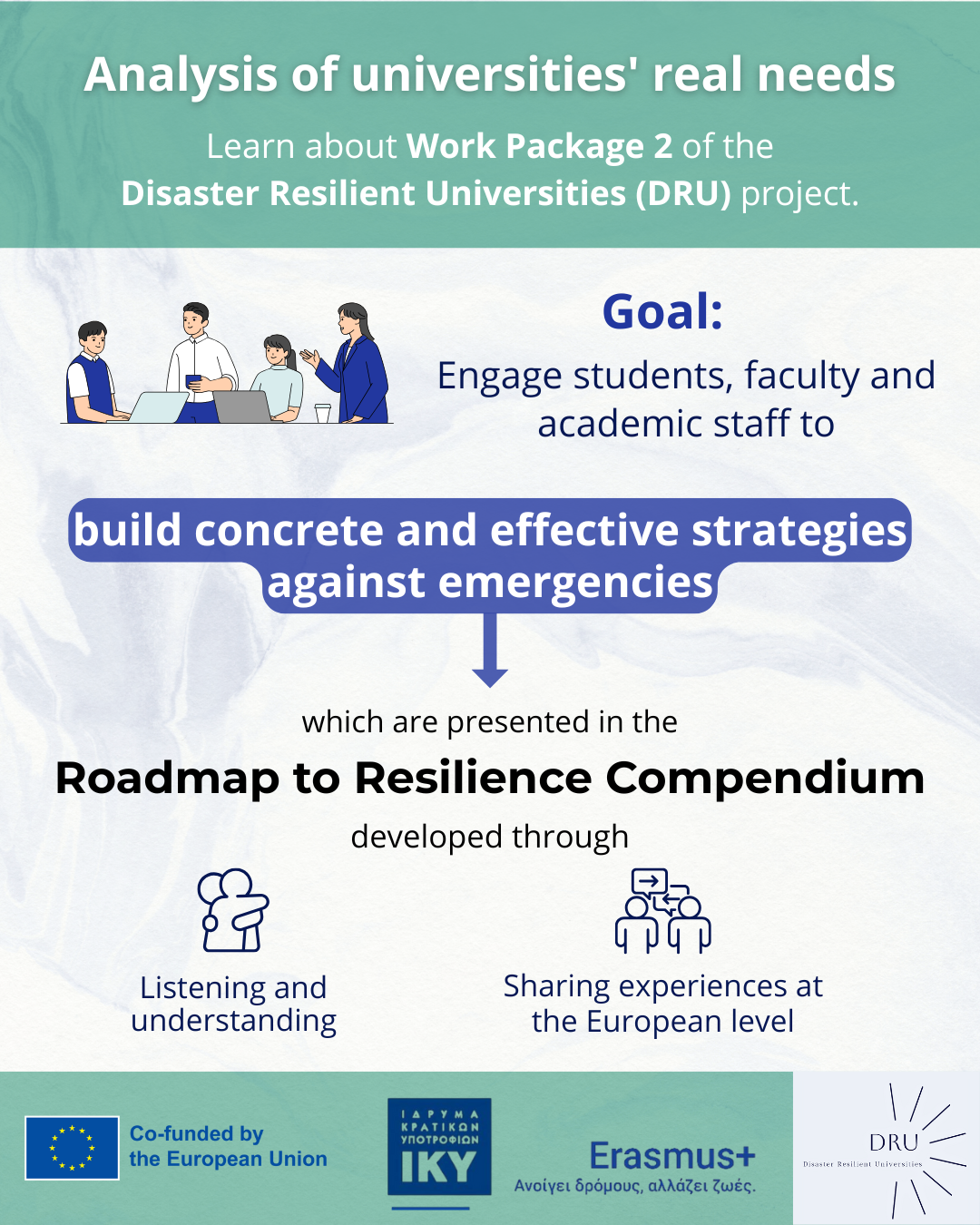
Funded by Erasmus+, DRU is a 2-year collaboration among universities and civil protection organizations from Albania, Italy, Bosnia and Herzegovina and Romania. Coordinated by the University of Ioannina (Greece), the project includes 5 partners, such as Ovidius University of Constanța (Romania), which leads Work Package 2 (WP2) — focused on assessing institutional preparedness, awareness, and emergency infrastructure.
Together, these partners have collected and analyzed data from over 160 students and staff, conducted national focus groups, and shared lessons learned from recent emergencies. The results are compelling and relevant across the region.
Preparedness Across Borders: Common Challenges, Shared Solutions
While experiences and hazards vary by country, the findings reveal cross-cutting themes:
- Earthquake awareness is high, particularly in Albania and Italy, where past seismic events have shaped public consciousness.
- Communication gaps are widespread: even where emergency procedures exist, many staff and students don't feel fully informed.
- Training and drills are inconsistent: across countries, only a minority of HEIs regularly test their emergency protocols.
- Dedicated disaster management units are rare — most universities lack specialized offices or officers for campus safety.
Despite these gaps, the survey also found strong procedural literacy among students and a desire for more inclusive and transparent emergency planning.
From Research to Action: DRU's Key Outputs
The DRU project is not just diagnosing problems — it is building tools for change. Three major outputs from WP2 include:
- Assessment Report: Evaluates disaster management capacity across partner universities.
- Compendium of Best Practices: Shares real-world examples of successful resilience strategies from across Europe.
- Roadmap to Resilience: A practical guide that outlines actions universities can take to better prepare for and respond to disasters.
These materials are designed to be adaptable, scalable, and shared widely — not only within the consortium but with universities across the EU and beyond.
DRU Project at a Glance
The Disaster Resilient Universities (DRU) project is an Erasmus+ Cooperation Partnership in Higher Education (KA220-HED) coordinated by the University of Ioannina (Greece).
Partners:
- University of Ioannina (Greece) — Project Coordinator
- Ovidius University of Constanța (Romania)
- University of Zenica (Bosnia and Herzegovina)
- Mediterranean University of Albania (MUA)
- Carolina Albasio (Italy)
Stronger Together: Why Collaboration Matters
All universities face diverse hazards, from wildfires to flooding, landslides to earthquakes. Yet the path to resilience is shared. DRU emphasizes cooperation among HEIs and civil protection agencies, the sharing of best practices, and the co-creation of tools that support learning, safety, and community wellbeing.
"Resilience doesn't stop at national borders. A fire in one country, an earthquake in another, they all teach us lessons we must apply collectively."
— Project participant, WP2 Focus Group
Explore More
Visit the DRU project to access the Roadmap to Resilience, best practice tools, and upcoming activities.